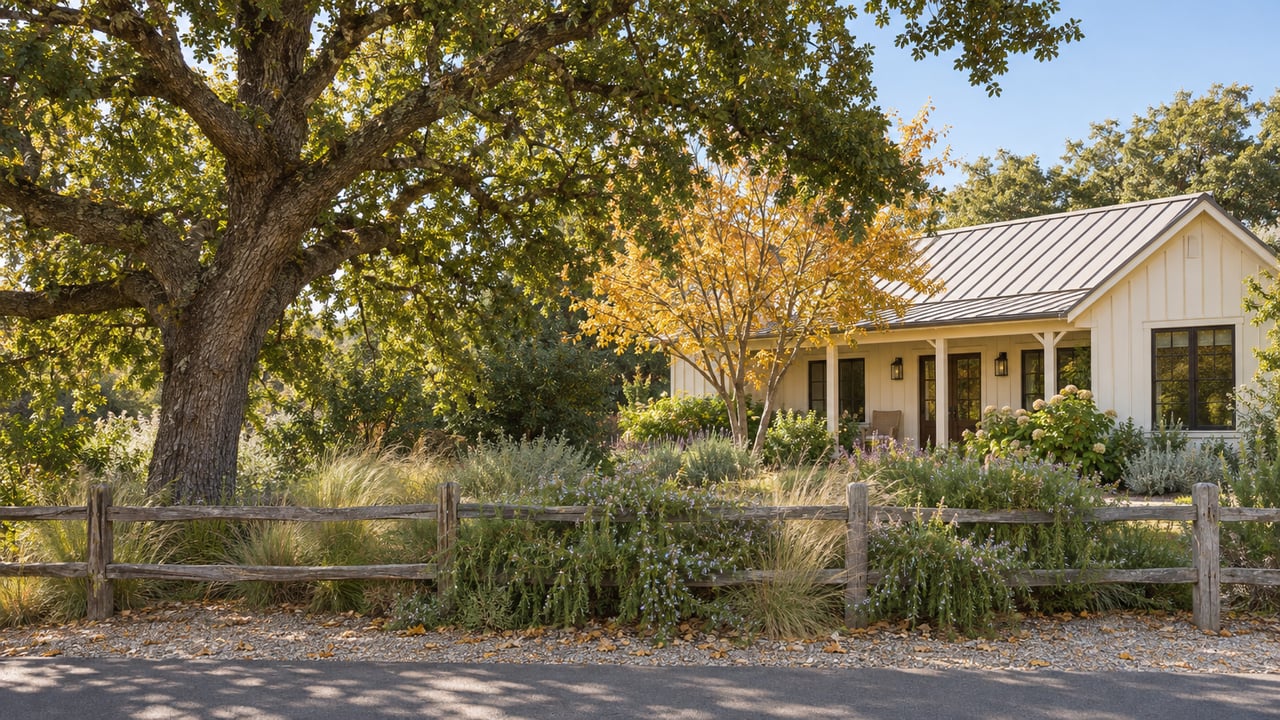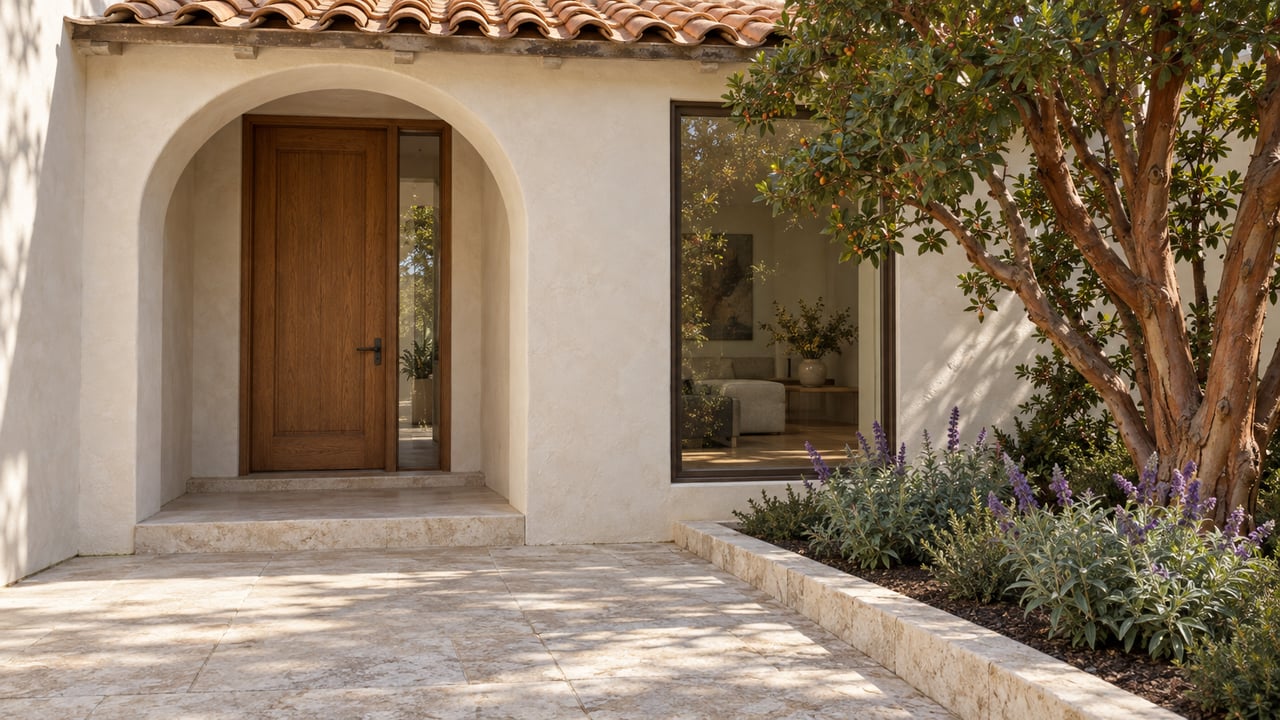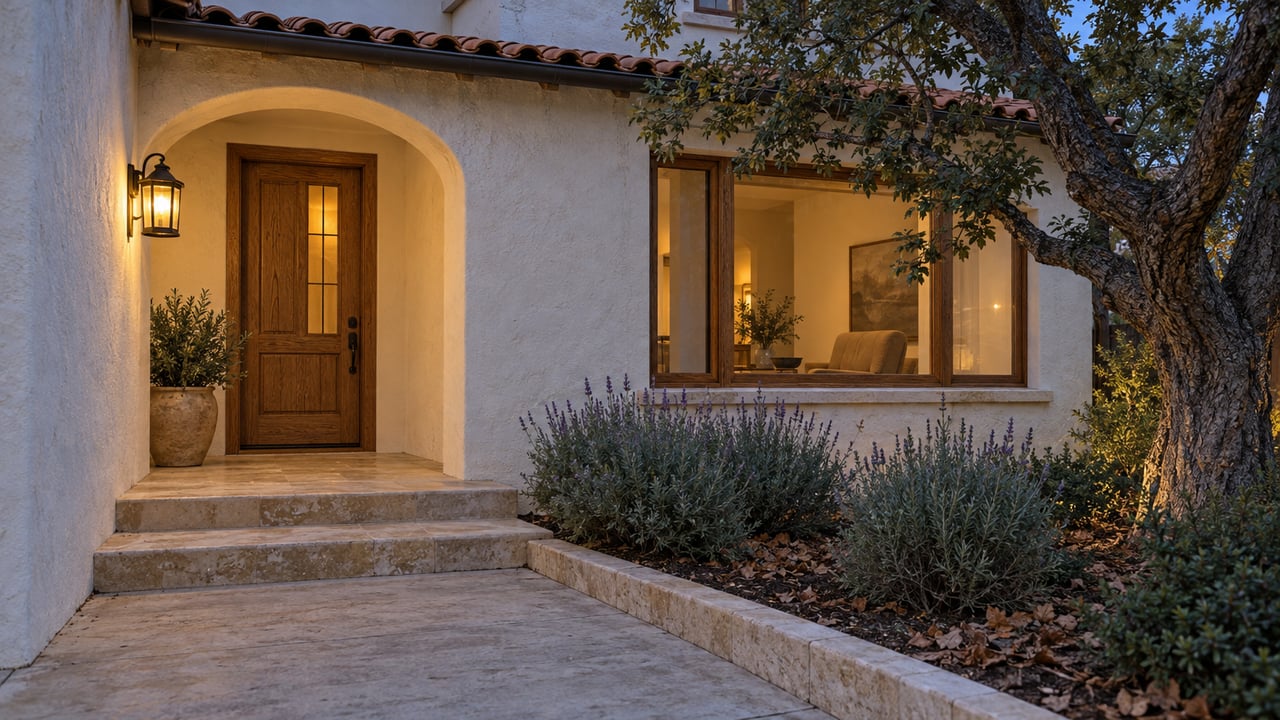
If you have been watching Goleta on the portals this summer, the headline number probably confused you. The median list is holding above $1.4M, but sale prices are slipping and homes are sitting. Meanwhile Carpinteria and Santa Barbara city are behaving like tighter markets an hour up the coast.
The soft read is not a demand story. It is a supply and construction story, and it is unusually specific to a few Goleta submarkets right now.
The number, and what it is actually measuring
Depending on which source you pull, Goleta's mid-2026 market looks slightly different. Movoto put the July 2026 median list at roughly $1.47M with a median 59 days on market. Redfin's June read had the average sale price closer to $1.17M with homes moving in about 40 days, down materially from a year earlier. Zillow's ZHVI landed around $1.33M as of late June, down close to 1% year over year. Property Focus showed a June 2026 single-family median near $1.30M on about 200 sales in the trailing year.
Those are four different lenses on the same city, and they agree on the direction. Prices are down modestly year over year, days on market have roughly doubled from the 2025 spring pace, and volume is thinner.
The interesting part is what happens when you break Goleta apart. Redfin's Goleta North submarket showed median sale price per square foot at $911 in June 2026, up about 7% year over year, with homes going pending in around 31 days and some closing above list. Goleta North is behaving like a normal, supply-constrained South Coast market. The softness is concentrated where the construction and the pipeline are visible from the street.
The Goleta discount you are seeing on the portals is not a citywide discount. It is a friction discount attached to specific corridors, and it has a rough expiration date.
What is actually being built, and what is only proposed
Buyers who assume Goleta is quietly the same coastal town it was five years ago are working from an outdated map. The pipeline that has moved through the county and city in the last twenty-four months is one of the largest on the South Coast.
- The Orchard. The Giorgi family's 60-plus acres of lemon and avocado groves on Hollister at Highway 217 has been proposed for 1,771 units, including 264 low-income, 120 moderate, and 60 workforce units, with the balance market rate. It sits about a half-mile west of Goleta Valley Cottage Hospital.
- South Patterson. Roughly 3,000 homes are projected across seven parcels totaling 192 acres under the Santa Barbara Municipal Airport flight path. A 65-acre parcel owned by the Giorgi family filed under the state's builder's remedy in 2023 for 1,096 of those homes.
- Glen Annie. Between 800 and 1,000 units are projected across 94 acres at the Glen Annie Golf Club site, with 64 acres remaining zoned agricultural.
- 5955 Calle Real. City Ventures of Irvine is proposing 46 all-electric homes on the former Santa Barbara Motorsports site, a Trader Joe's-anchored stretch of Calle Real. Units run 1,333 to 1,672 square feet, two are deed-restricted to very-low-income households, and the project went to Design Review Board conceptual review on July 14, 2026.
On March 17, 2026, the Goleta City Council voted to apply for a Sphere of Influence over the Glen Annie and South Patterson farmland that the County of Santa Barbara had rezoned to high-density residential in 2024. That vote confers no planning authority yet, but it changes the political conversation about who eventually controls services, streets, and permitting in those pockets.
For a buyer, the practical read is this: the sheer scale of what has been entitled or proposed inside a five-mile radius has entered listing agents' pricing conversations. Sellers along Hollister and Calle Real corridors are anchoring to a market that includes future supply competition. Sellers in Goleta North, closer to the foothills and further from the construction, are still pricing to a scarcity market.
The Old Town tax that shows up on every showing
Anyone showing houses in Old Town Goleta right now is talking about traffic. That is not incidental to price.
The City of Goleta's Project Connect began construction on June 8, 2026, and is expected to wrap in late Fall 2026. It includes two new roundabouts at the Hollister Avenue and State Route 217 ramp intersections, an Ekwill Street extension linking Kellogg Avenue to Fairview Avenue across Old Town, and a new roundabout at Pine Avenue and Ekwill. Separately, the city's interim restriping on Hollister Avenue reduced the corridor from four lanes to two, added bike lanes and back-in angled parking, and remains publicly contested. As of May 2026, city data showed reduced vehicle speeds and lower collision counts, while some Old Town merchants reported material declines in customer traffic. Peter Jimenez, the owner of Goleta Barbers, told KEYT his business was down roughly 40% since construction began.
For a buyer touring a house within a few blocks of Hollister, that is not background noise. It is a live drag on how the listing agent has set expectations, how long the home has sat, and how a seller responds to a below-list offer. It is also, on a longer horizon, why some of the most interesting entry points into Old Town-adjacent housing are showing up in 2026.
The counterweight is what gets built into the same corridor after the cones come down. The San Jose Creek Multipurpose Path broke ground on April 9, 2026, at Armitos Park and Community Garden. The three-mile Class I bike and pedestrian path will eventually connect northern Goleta neighborhoods to Old Town, UCSB, and the beach, funded by roughly $17.9 million from the California Transportation Commission's Active Transportation Program and $11.16 million from the federal Reconnecting Communities Pilot. Old Town Pride of Place grants are underwriting new streetscape features, including an "Entry to Old Town" mural on Carpeteria Carpet One's Hollister Avenue wall, designed by local artist Jessica Altstatt and reviewed by the city in June 2026.
The mechanism is straightforward. Corridors that are hard to show during construction almost always trade at a discount to what they will support once the construction finishes and the connectivity investments come online. That discount is priced into some current Goleta listings and is not priced into equivalent Santa Barbara city or Carpinteria listings, because those two markets are not absorbing a comparable pipeline or a comparable construction period.
How this reshapes a Goleta buyer's decision
If you are comparing Goleta to Santa Barbara city, Carpinteria, or Montecito right now, the honest read is that you are comparing three different pricing regimes.
- Goleta North and foothill submarkets. Behaving like the rest of the South Coast. Fast pending timelines, price-per-foot up year over year, occasional overbids. Underwrite these on scarcity, not on the citywide median.
- Old Town-adjacent and Hollister corridor properties. Where the softness is concentrated. Longer days on market, more room to negotiate, real construction friction now, real connectivity upside once Project Connect and the San Jose Creek Path deliver. A buyer with a two to five year hold horizon is looking at a different risk profile than a buyer who needs to resell in eighteen months.
- Calle Real infill and the eastern pipeline neighborhoods. Where future supply matters most. A resale in 2028 or 2029 will compete with product that does not yet have a certificate of occupancy. This does not mean values fall; it means comparables shift, and pricing an unusual house without a strong agent read on the pipeline is a real risk.
None of this shows up in a single median. It shows up when you look at what the median is quietly averaging together.
Questions buyers keep asking
Will the Orchard, South Patterson, and Glen Annie projects actually get built? Some portion will. The state has mandated the county find land for 5,664 new units between now and 2031, and several of these parcels are already rezoned or moving through streamlined channels. The composition, the timing, and the mix of market-rate versus deed-restricted product are all live questions. Assume more supply, and assume it is phased.
Does new construction hurt existing home values? Not uniformly. New product tends to compete with new product. Older single-family homes on established lots, particularly in submarkets like Goleta North that sit outside the pipeline footprint, tend to hold on scarcity. The homes most exposed to comparable pressure are those that will compete directly on size, price, and location with the new units.
Is the Old Town restriping permanent? The city has described the current configuration as interim, tied to the Project Connect construction window. Whether it becomes permanent is a City Council decision informed by ongoing safety and traffic data. A buyer along Hollister should assume the corridor's character keeps evolving through at least late 2026.
Should I wait? Waiting has a cost when the current softness is corridor-specific rather than citywide. If the house you want is in a Goleta submarket that is already tight, the market is not waiting with you. If it is in a construction-affected corridor, the question is whether the friction you can see now is worth more than the connectivity you cannot see yet.
Reading Goleta well in 2026 means reading it street by street rather than city-wide. If you are weighing a specific Goleta home against a Carpinteria, Santa Barbara, or Montecito alternative, Ally Edwards can walk the pipeline, the corridor, and the comparables with you before you write an offer. Get Your Free Home Valuation to start the conversation.